
PRESENTER(S)
 Emily Constantine Mercurio, PhD, PG, is a big thinker and a lifelong learner. She is an experienced geoscientist and an expert in mapping, field geology, GIS, remote sensing, and geospatial technology. As co-founder and CEO of CivicMapper, Emily draws upon more than 20 years of experience as a leader in map-based technology projects. Her current work is focused on creating spatially-enabled applications that empower decision making on the front lines of climate change, infrastructure, and social equity. Emily is a licensed professional geologist in the state of Pennsylvania. In addition to service on the Three Rivers Waterkeeper board, she also sits on the board of the Pennsylvania State University Graduates of Earth and Mineral Science. She enjoys gardening, visiting hot springs, making art, and spending time on the water with family and friends.
 Srini Dharmapuri
Dr. Srini Dharmapuri, CP, CMS, PMP is with Sanborn Map Company in Pittsburgh, Pennsylvania as VP/Chief Scientist. Dr. Dharmapuri has Master of Science (Physics), Master of Technology (Remote Sensing), and Doctorate (Satellite Photogrammetry) degrees with more than 30+ years of wide-ranging experience within the Geospatial Industry, most notably with lidar, Photogrammetry, GIS and UAS.
 John Wolf is the GIS Team Leader for the Chesapeake Bay Program where he is responsible for planning, developing and applying GIS and data visualization to address conservation and restoration issues.
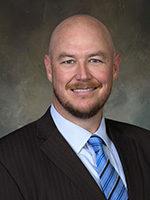 Sean E. Crager was named the Chief Technology Officer for the Commonwealth of Pennsylvania in February 2019.
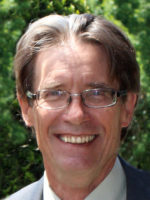 Eric Jespersen has over 35 years of professional experience, including 25 years of leadership in coordinated GIS development in Pennsylvania. He has both participated in and led many and varied ground-breaking projects, starting with GPS applications in the early 1990’s, land tenure reform in El Salvador, nationwide GIS data accuracy assessments for the US Census Bureau, PAMAP Program promotion and development, and advocacy and involvement in the creation and development of the State Geospatial Coordinating Board in Pennsylvania. Eric is an avid student and researcher of civic boundaries in PA, and helped establish a Civic Boundary Working Group to improve data and practice. His other long-term project is the improvement of our surface water representation, replacing our current 2D stream layer with 3D elevation-derived hydrography; that effort included active engagement in securing lidar updates for the entire Commonwealth.
 Daniel Valadas is a Junior Geography major at Penn State pursuing a career in GIS.
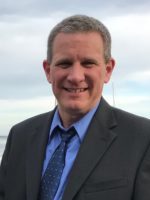 Dr. Tom Mueller has been a geography professor at California University of Pennsylvania since 1999. He received his degrees at Towson University (BS), University of Connecticut (MA) and University of Illinois (Ph.D.). He co-created and is the advisor for the Geography Major with a concentration in Geographic Information Technology. His interests include Geographic Information Systems (Computer Mapping), geography education and world regional geography. His goal is to apply spatial theory to the real world, particularly using GIS. It is essential that service learning be included in his geography courses. For example, students in his courses have completed real world projects for local police departments, Federal Emergency Management Agency, etc.. He has also taught numerous GIS workshops for members of the local community, professors at Cal U and other campuses and K – 12 community. He has built a successful geography research agenda through a variety of scholarly endeavors, including conference presentations, grants, technical reports, book reviews and publications in professional journals
 Nicole Ernst Nicole holds Bachelor of Arts degrees in political science (Slippery Rock University) and environmental studies (Montana State University) and a Master of Arts degree in Geography from East Carolina University. In her professional career, she has worked as a cartographer for the National Park Service at Bighorn Canyon in Montana/Wyoming and then for the Outer Banks Group of parks in North Carolina. Currently she is Associate Professor of Geospatial Technology at Harrisburg Area Community College (HACC) in Central Pennsylvania. At HACC she teaches for the college’s Virtual Learning unit and uses community based geospatial projects to enhance the student experience.